Auto-Git is a cross-platform Electron app that automatically monitors and manages Git repos and writes commit messages and documentation / READMEs using LLMs.
Monitoring & Automatic Commit
– Add any folders as Git repositories: Auto-Git takes care of the initial Git setup if needed.
– Real-time file watching (Chokidar): As soon as files change, changes are detected in a debounce interval and automatically committed to Git.
– Intelligent commit messages: Once a defined line or time threshold is reached, Auto-Git collects all new commits, creates a prompt-optimized input for an Ollama-LLM (qwen2.5-Coder) from their diffs, and replaces the standard commit messages with semantically concise summaries.
README Generation & Repository Description
– At the push of a button or upon initial addition: Auto-Git extracts relevant code files (by size, relevance score, .gitignore rules) and feeds them into an LLM prompt to automatically create or update a complete, well-structured README.md.
– LLM-assisted short description (≤ 255 characters): For each folder, Auto-Git can generate a one-liner project description text in fractions of a second using the same Ollama backend.
Robust Folder Management
– Missing or moved folders are automatically detected (“Needs Relocation”), and by clicking on the sidebar icon, you can assign the new path and restore the original Git state (checked via commit hash).
– Simple drag-and-drop support: Drag folders directly into the app, instantly initialize a Git repo, and set it to monitoring.
– .gitignore management: Typical temporary/IDE/build files are automatically detected (Micromatch + predefined patterns) and added to .gitignore if needed.
Gitea Integration & Push Workflow
– In the settings, a personal Gitea API token can be stored.
– When clicking “Push to Gitea”, Auto-Git checks if the remote repo already exists:
Not available → Create repository (with LLM-generated short description).
Available → Update current description via PATCH.
– Afterwards, the local remote origin is reconfigured, and the current branch including tags is automatically pushed.
Desktop UI & Usability
– Electron & TailwindCSS: Responsive interface with sidebar (filtered list of all monitored folders), central content area (displays all commits paginated, including diff view, snapshot export, and “Jump Here” checkout).
– Sky Mode: Automatic time-dependent background (soft blue during the day, dark blue at night).
– Tray Menu & Tray Icon: App minimized to tray, right-clicking on the tray icon allows quick starting/stopping of monitoring per folder, adding/removing folders, “Quit”.
– Settings Dialog:
> Sky theme on/off
> “Close to Tray”: Hides window when closing, instead of actually quitting the app
> Automatic startup behavior
> Intelligent commit thresholds (lines and minutes)
> Selection of used Ollama models (commit vs. README)
> Store Gitea API token
– Gamification & Live Statistics: Daily counter for commits, color-increasing visualization (“Commits today”), live countdown until the next automatic LLM commit.
Technology Stack
– Frontend: Electron + HTML/CSS + TailwindCSS + a custom minimal-animated “Anime Cat” (client-side cat streaming for LLM responses).
– Backend/Node:
> chokidar for file watching
> simple-git for all Git operations (Init, Status, Commit, Diff, Rebase, Push, Remote Config)
> micromatch & ignore for filtering files/folders
> electron-store for persistence of all settings (including Gitea token, sky mode, thresholds, model selection)
> Tray/Menu integration with native Electron menus and context menus in sidebar/treeview.
All features – from continuous, automatic commit creation to fully automated push-and-repo setup on Gitea – are designed to make developers’ everyday lives easier: You can continue to focus on code while Auto-Git ensures that commit history, documentation, and remote repositories are always up to date.
The “Virtual Interdimensional Ghost Teleportation Device” is an interactive 3D web application that brings figures from Japanese mythology to life in the browser. Through a digital “Merkaba,” the beings are teleported into a virtual world, can be viewed, and explored via a click in an info box overlay. A portfolio project aimed at learning about Japanese myths in German and building cultural bridges.
Frontend: Three.js Backend: Node.js, Express, Websocket 3D Models: Hunyuan3D-2, edited in Blender Info Texts: ChatGPT
The entire 3D environment including models and textures, such as a 1200px x 900px canopy texture and an HDRI environment map, as well as all the code, is smaller than 500 kilobytes. The 3D models are loaded dynamically; the client has no information about them until the server “pushes” them. The communication with the server as well as the spawn function are integrated into the spinner (Merkaba). Mobile representation is less computationally intensive than the desktop version. An adaptive fidelity system has also been implemented.
Smart Furigana
The character 一日 can be read as “いちにち” (“the whole day”), or as ついたち (“the first day of the month”). Depending on the context, the readings of some Kanji differ.
Furigana are a Japanese reading aid. They are Hiragana characters that are written next to or above a Kanji in Japanese writing to indicate its pronunciation.
Conventional Furigana software does not recognize the holistic meaning or context of a text, and is therefore sometimes unable to provide the Furigana in the way a Japanese reader would actually read the text.
However, with AI, this is now possible, which is why I programmed this software. “Smart-Furi” analyzes the text for context, tone, etc., to add the appropriate readings as Furigana to the text – so that one does not learn the readings of the characters incorrectly, but as if a Japanese person were reading the text aloud.
Interface for UNESCOs Lists of "Intangible Cultural Heritage"
The UNESCO project “Intangible Cultural Heritage” (ICH) offers an impressive collection of intangible cultural heritage as well as a register of best protection measures. These can be found on the UNESCO website in English, French, and Spanish, beautifully describing the individual cultural peculiarities of the nations of the world.
As a friend of online ethnology, I have set up a new interface in the form of an interactive world map (JavaScript, OpenStreetMap & GeoJSON). By clicking on a country, you gain insight into the culture of that country as registered by UNESCO (UNESCO Open Access Database). Using the ChatGPT API and Python, I translated the entire database into the 10 most spoken languages in the world. Additionally, I improved/enlarged all images from the database with Topaz AI.
By clicking on the cube, a random entry is displayed. Discover the world!
Note: Not suitable for mobile view
Sources:
UNESCO Open Access Database: Metadata, descriptions, and images from the UNESCO ICH database were used for this project.
OpenStreetMap: The map representation is based on tiles from OpenStreetMap.
GeoJSON World Map: The vector data for the country outlines comes from the open-source GeoJSON project.
IPAPI (ipapi.co): Automatic location determination is done via the API service ipapi.co.
Topaz AI: The images from the UNESCO database were upscaled using Topaz AI.
ChatGPT (OpenAI): The translations of the UNESCO data into 10 languages were created using ChatGPT.
This project is an experimental, non-commercial portfolio project and is for demonstration purposes only. All content (images, texts, titles) is the property of UNESCO. The translations were created using AI (ChatGPT). The map tiles come from OpenStreetMap. There is no connection to UNESCO, OpenStreetMap, or other organizations. The complete UNESCO metadata is available for download in English.
AI-Translate
WordPress plugin to automatically translate pages, posts, and custom type posts as well as their titles and custom fields. The translations are stored in the metadata of the posts. Depending on the selected language, the frontend displays the language under the same URL / post ID. In the Gutenberg editor, there is a small dropdown menu that allows you to switch between languages to make individual changes, and in the backend, unlike with Polylang, there is no confusing duplication of content. The translation is done via ChatGPT, which allows for context-specific translation – by specifying what the tone should be, e.g., polite or informal, and what the focus should be, such as project presentation, marketing, etc., better translations can be obtained.
The code for selecting and processing content is available in a git repository.
Study on the Topic: Artificial Intelligence (2016-2019)
From 2015 to 2019, I engaged intensively with artificial intelligence, virtual humanoids, human-machine interactions, and the resulting philosophical and cultural questions during my studies at the University of Fine Arts Saar in Saarbrücken. I dealt with the limits and misunderstandings in dealing with AI technologies both theoretically and practically as an artist.
In my bachelor’s thesis “Comparison between Artificial and Real Intelligence” (2017, final grade 1.0), I explored how digital avatars simulate learning processes using genetic algorithms and compared these with the real learning and pain experiences of a human performer. The performance “Learning” utilized the optical Pepper’s Ghost effect for the spatial representation of a digital character. The results clearly highlighted the emotional gap between technical simulation and human experience.
In my master’s thesis, I expanded this approach and delved deeper into the perception and staging of virtual characters and their interactions with humans. Among other things, the following projects emerged:
Gerkzeuk (2016): A computer-controlled object that autonomously downloads, modifies, and sells images from the internet. This object raised fundamental questions about authorship, machine ethics, and the role of the artist. Through a holographic representation (“Iris”), the machine artist was additionally given a human-like persona. Link to project page
Pepper’s Ghost Crystals (since 2016): Interactive showcases that holographically depict virtual humanoids and are equipped with facial recognition, emotion analysis, and speech recognition software. This work intensely researched making artificial and human interaction tangible. Link to project page
Comparison between Artificial and Real Intelligence (2017): A performance in which a digital character, using genetic algorithms, attempts to learn basic motor skills in parallel with a human performer. The work clearly reveals the differences and emotional dimensions between digital simulation and human experience. Link to project page
Anti-Art (2019): A deliberately simple apparatus with a puppet, controlled by unpredictable impulses, humorously and critically reflects the hype around AI technologies and their frequent overestimation. Link to project page
Spatial Installation for the Master’s Exhibition (2019): In a scenographic situation, I subjected visitors to a reflective interaction by automatically photographing them and projecting their faces, making themes such as self-perception, data protection, and echo chambers tangible. Link to project page
These projects were accompanied by theoretical reflections on transparency in design, black box issues, random and deterministic systems, as well as ethical and philosophical dimensions of AI. Inspired by references such as Frieder Nake, Andrew Glassner, and Richard David Precht, I critically engaged with terms and misunderstandings surrounding artificial intelligence, artificial life, and consciousness.
From my artistic research, the following central insights emerged:
AI technologies can imitate human behavior, but they do not generate genuine emotional depth or authentic empathy. The illusion of human interaction created by machines always remains on a superficial level.
The misuse of metaphorical terms from biology and neuroscience in technology (such as “neural network” or “intelligence”) significantly contributes to misunderstandings and a mythical overestimation of technical possibilities.
The use of transparency design and the disclosure of technical processes are essential to alleviate fears and promote critical thinking towards modern technologies.
Randomness and unpredictability in technical systems often create a perception of magic or autonomy, which can lead to overinterpretation of technical capabilities.
The cultural and societal reception of AI technologies and virtual characters is strongly influenced by projections and fantasies that are deeply rooted in our psychological tendency to perceive human-like qualities in technical artifacts.
Despite the apparent autonomy of software and machines, the responsibility always lies with the human who designs, programs, and operates these systems. Machines and software remain tools and will never become independent subjects.
The question of the meaning of “life” gains new depth through engagement with autonomous and self-reproducing programs like the “Forkbomb” and challenges classical biological definitions.
Psychologically, the work of scientists, IT technicians, and artists often reveals an unconscious motivation to create artificial beings, comparable to the “womb envy” discussed in psychology. This reflects the deep need to creatively produce life or living systems.
Object-oriented programming opens up the possibility of reconstructing virtual worlds and invites reflection on the boundaries between reality and simulation.
My work between 2015 and 2019 thus represents a versatile, critical, and innovative engagement with humanity, technology, and their complex relationships, aiming to contribute to a well-founded and reflective public discourse on these topics.
QuBeenee
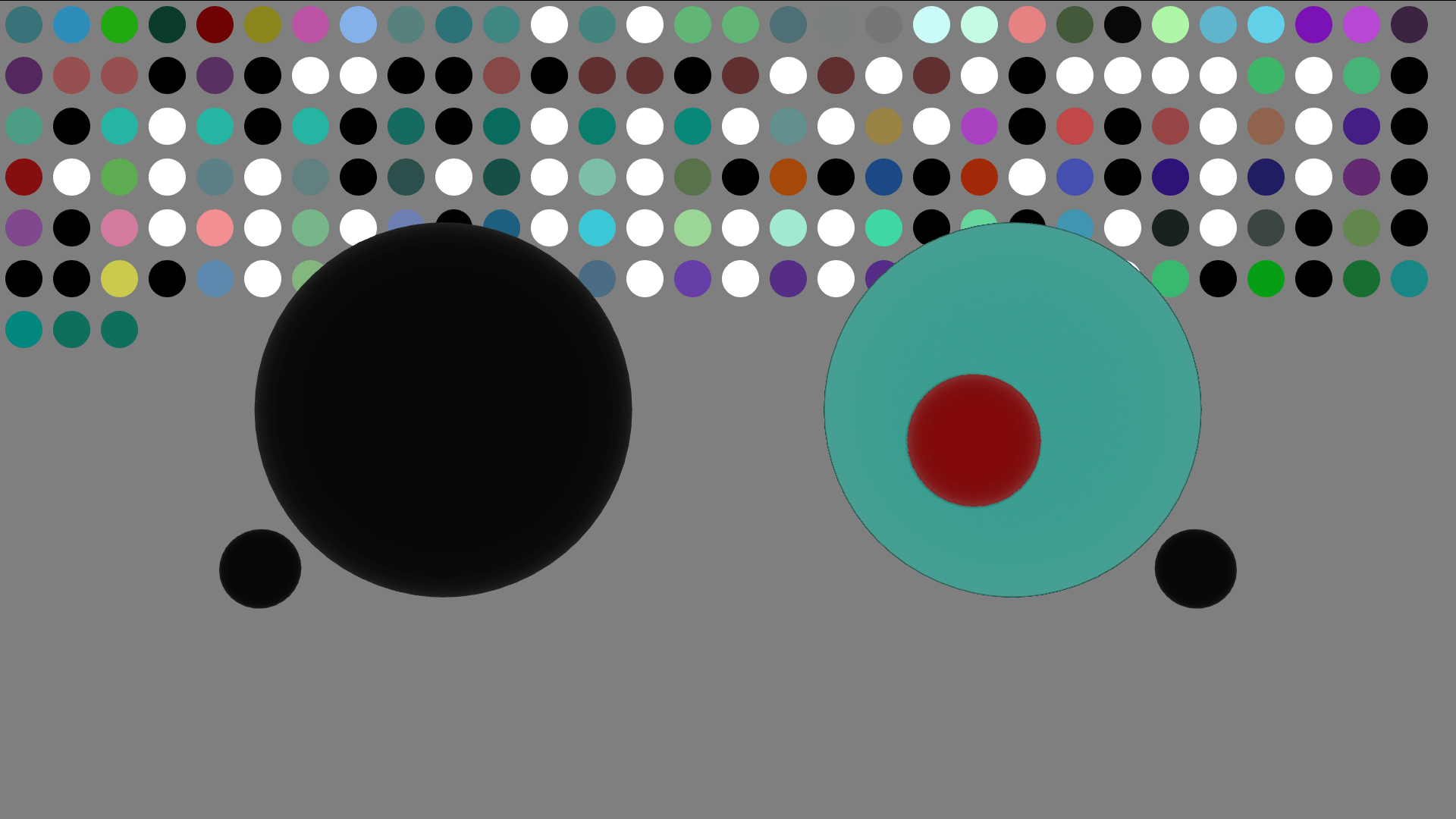
A punch card generator for quantum computers (hypothetical). Comparison of bit and qubit. Practical thinking about interfaces for qubits starting from the idea that logic or computation by qubits can be understood with 3D vectors.
Manual: The left orb represents a bit. “State” controllable by clicking on it. The right sphere represents a qubit. “State” controllable in 3D space by drag’n’drop (x- and y-axis) and mouse wheel (z-axis) via the inner sphere. Small orbs toggle punch card printing.
Simple Ontology
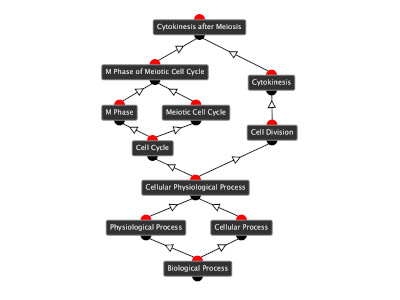
Define truth! Create your own node-network graphs, also known as ontologies.
Tool for creating ontological network topologies, written in Java. Has the functionality to save and load and export images. Smallest alternative to Protégé, ONTOLIS, or OntoStudio.
Comparison between Artificial and Real Intelligence
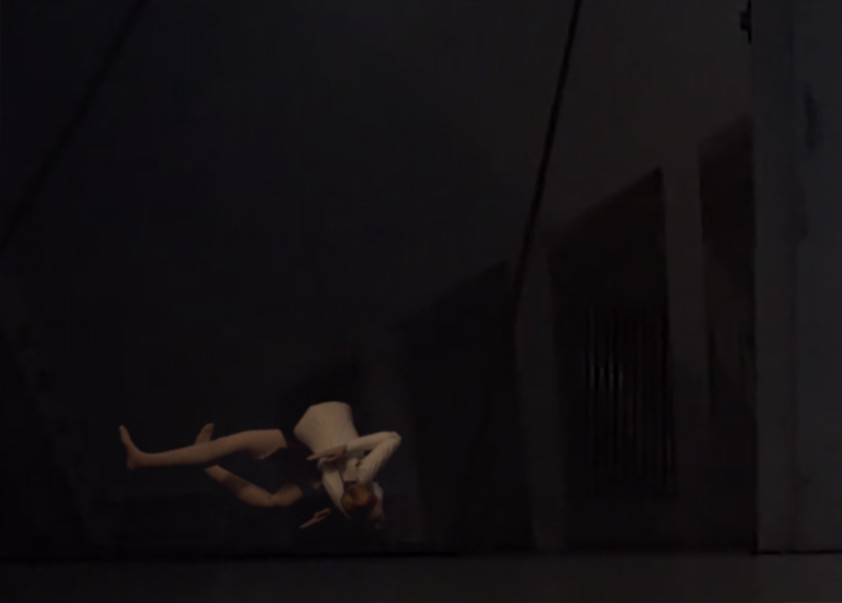
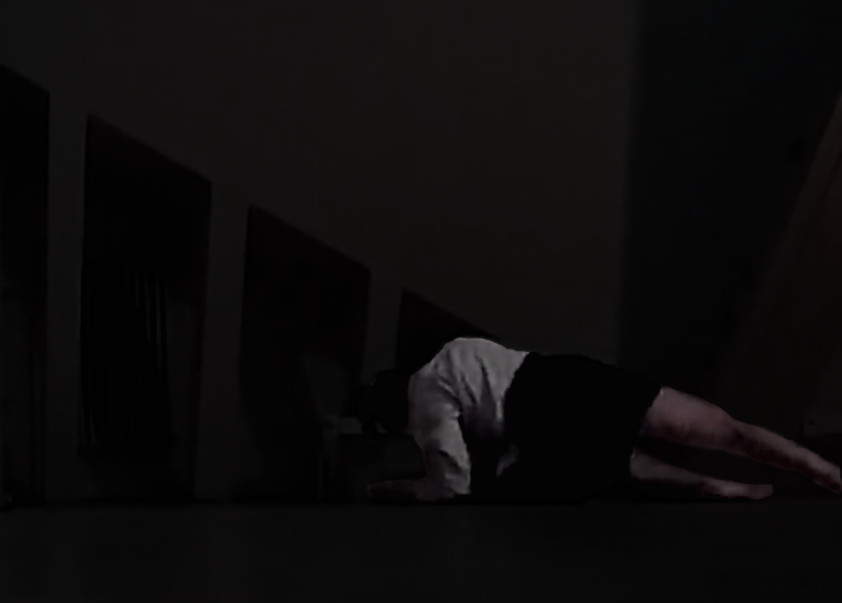
In the performance “Learning”, the action potentials of real and artificial intelligence are compared by having an actor and a 3D character (spatially visualized through Pepper’s Ghost effect) act in equivalent spaces in parallel. Both are initially unable to stand and try to learn this during the performance. The actors repeatedly fall to the ground and try to learn from their mistakes. The digital character is equipped with a genetic algorithm, a programmed intelligence, while the real character has an organic brain. The avatar learns to stand faster than the human but simultaneously appears ridiculous in its uncoordinated actions, revealing the distance of digital technology to the real human. In contrast, the human evokes emotional empathy in the viewer through their physical pain and desperate attempts to stand.
Andreas Bayer
Video of the working process, how the AI learned to stand:
World Map with Timeline - Stories of Four World Religions
Connections between events in the world can be better understood with spatial and temporal representation. This world map adapts to the chosen time – allowing one to intuitively browse all dimensions. As an interface for educational purposes, it functions as seen here.
If such an interface were linked to Wikipedia, for example, one could browse its articles through time and space. “Where was what when?” could be directly visually revealed, new connections could be recognized. Or imagine being able to travel back in time on Google Earth using a timeline.
This student proof of concept includes over 500 info points with text on four world religions. It was presented in 2017 at the annual student exhibition of the University of Design.
Privacy Policy
A cookie has been stored. Its name is "lang", it is 6 bytes in size, lasts three days, and is technically necessary because it can remember which language you prefer. Do not harm it!